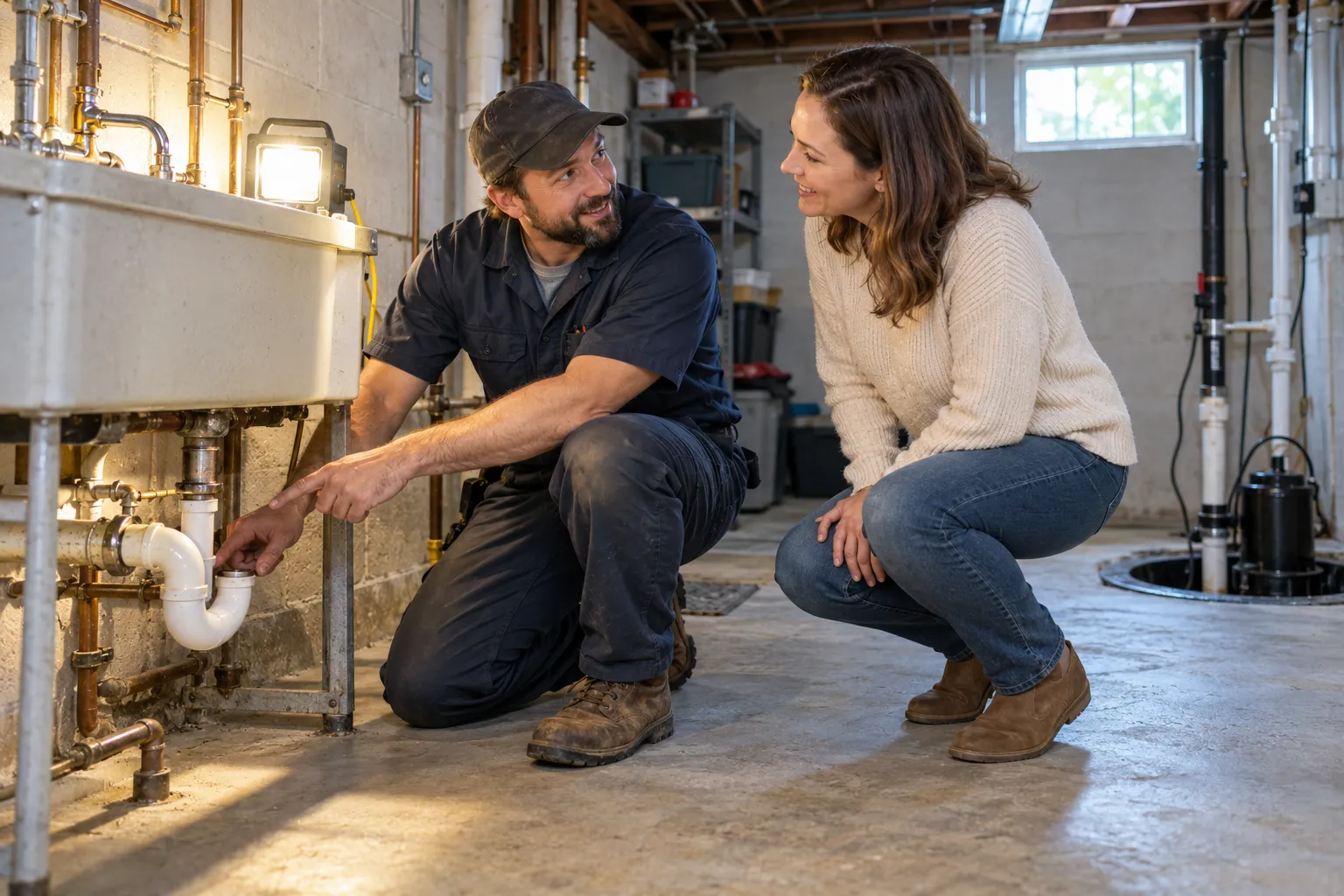
Paperwork for a Plumbing Emergency in Minneapolis
The paperwork clock
Paperwork follows the same timeline as the repair. Some of it can only be done in the first hour, such as photos of the damage before cleanup. Some can wait for the first week, such as a permit or an HOA notice. Doing each at the right time prevents trouble later.
- Hour 1: shut off the water and take photos and video.
- Day 1: read your policy and notify your insurer if you think a claim is possible. Keep receipts.
- Days 1 to 3: get a written estimate and ask who handles any permit.
- Week 1: notify the HOA or building manager if required. Keep the final invoice and warranty.
Photos and records worth keeping
Take pictures before anything is moved or thrown away. Wide shots show where the damage sits in the room. Close-ups show the source. Add video of running or standing water.
- The failed pipe, fitting or tank, before removal if possible.
- Water stains, wet walls, floors and ceilings below the leak.
- Damaged belongings, with a note of what each item is.
- The water meter and the main shutoff.
- Dates and times, noted as the events happen.
Keep damaged parts if the provider agrees. Save every invoice, estimate and receipt for drying equipment, hotel stays or cleanup supplies.
Insurance, in general terms
Policies differ a lot. Many treat sudden water damage differently from slow or long-term leaks. Many cover the damage and not the pipe or tank that failed. Deductibles, exclusions and limits vary. Sewer or drain backup often needs a separate endorsement.
Coverage is the insurer's decision, and nothing here predicts how a claim will turn out. The practical steps are these:
- Read the water damage and backup sections of your policy.
- Report the loss promptly and ask what the insurer wants documented.
- Take reasonable steps to limit further damage. Shutting off the water counts.
- Ask the insurer before discarding major items or starting large repairs.
Permits
Whether a permit is needed depends on the municipality and on the work. Replacing a water heater, repiping a section, or repairing or replacing a sewer line may require one in some places. A simple repair of a fitting may not. Ask the provider two questions: is a permit needed, and who pulls it. Check with the local building department if you are unsure.
A permit can mean an inspection. Plan for that in the schedule, since it can add a day or more between the repair and sign-off. Keep the permit and inspection record with your house files. Unpermitted work can raise questions later, for example at a sale or during an insurance review.
Fees vary by location. Ask for the figure from the local office rather than relying on a guess.
HOA, condo and shared lines
If you live in an HOA, read the rules on exterior work, contractor access and noise hours. Some require notice or approval, especially for work visible from outside or for anything that touches shared walls. In a condo or townhome, find out which pipes belong to the association and which belong to you. A leak in a shared line may involve the building manager and the association's own insurance.
Send notices in writing and keep a copy.
Build one file
Put photos, estimates, invoices, permit papers, warranty terms and insurer messages in one folder, paper or digital. It saves time if a claim, a sale or a second leak comes up later.
More homeowner guides
Paperwork for a Plumbing Emergency in Minneapolis: questions
What photos should I take before cleaning up water damage?
Take wide shots of each affected room, close-ups of the source and the failed part, and photos of wet walls, ceilings and floors. Add video of any running water. Photograph damaged belongings too. Do this before moving things, and note the date and time as you go.
Does homeowners insurance cover a burst pipe?
It depends on the policy. Many policies cover sudden water damage but may exclude the failed pipe itself or long-term leaks. Backup coverage is often separate. Read your policy and ask your insurer directly. Nothing can be assumed in advance, and coverage is the insurer's decision.
Who is responsible for getting a plumbing permit?
It varies. Often the provider pulls the permit for work that needs one, but you should confirm this before work starts. Ask whether the job needs a permit and whether an inspection is required. The local building department can confirm the rules for your address.
Tell us what happened
Describe the problem and a local provider in our network can follow up. Request a callback to check availability, or send a request by email at contact@purchasednewspaper.garden.
No obligation