Sewer Line Repair for Homes in Minneapolis
A sewer line carries every drop of waste water from your house to the street or a septic tank. When it clogs, cracks or collapses, the water has nowhere to go but back into your home. Early signs are slow drains, gurgling and odd smells. Later signs are sewage in the drain closest to the basement floor.
Purchasednewspaper Plumbing is a referral service. We explain what happens in the first hour, first day and first week of a sewer failure, then connect you with independent providers in our network. The providers do the inspection and repair. Older houses get extra attention here, because aging pipe and past patch jobs often hide surprises. Use this page to learn the steps, the repair options and the questions to ask before work begins.
Sewage in the House: Stop, Then Get Help
Sewage rising in a floor drain, tub or toilet means the main line is blocked or broken. Treat the water as contaminated.
- Stop all water use. No flushing, showers, dishwasher or laundry.
- Keep children and pets out of the wet area.
- Do not step into standing water near outlets or appliances.
- Open a window if the smell is strong.
Request a callback to check provider availability in your area.
Mind the Clock: The First Hour
Every flush and every shower sends more water into a line that cannot take it. Stopping use keeps the backup from spreading. Note which drains are affected. If only the drain nearest the floor of your basement backs up, the main line is the likely cause. If one fixture is slow, the problem may be local.
The First Day
Sewage left on floors soaks into drywall, carpet and wood. Bacteria multiply in warm, damp spaces. A provider can often clear the blockage first, then inspect the pipe to learn why it failed. Photograph the damage before cleanup.
The First Week
Mold can start on wet materials within a few days. Smells settle into porous surfaces. A line that was cleared but never inspected may fail again. Arrange a camera inspection and a written repair plan before the next heavy use.
Signs Your Sewer Line Is Failing
Most failures give warning. Watch for these:
- Several drains slow at once
- Gurgling from toilets after a sink drains
- Sewage smell in the yard or basement
- Wet, sunken or unusually green patches over the line
- Repeat clogs after emergency drain clearing
One sign may be minor. Two or more point to the main line.
What Damages Sewer Lines
Tree roots are a very common culprit. They slip into joints seeking moisture, then thicken. Other causes include ground shifting, crushed pipe under driveways, grease buildup, and pipe that has simply worn out. A blocked pipe that keeps returning often signals damage, not just debris.
Older Pipes, Extra Care
Homes built many decades ago often have clay tile, cast iron or Orangeburg, a tar-paper pipe that softens and collapses over time. Clay joints let roots in. Cast iron rusts from the inside. Past repairs add risk: a patch of new plastic spliced into old pipe can leave a weak joint.
Older yards also hide surprises, such as an abandoned line or a pipe that bends where records say it runs straight. Ask the provider to check the whole run, not only the spot that backed up.
Frost, Floods and Storms
Deep winter frost moves soil and can crack rigid pipe. Spring flooding and heavy storms overload the system and push water into weak joints. Full basements sit low, so they show backups first. If you have a sump pump, keep it separate from the sewer line and ask the provider to confirm it is not tied in.
How Providers Diagnose the Problem
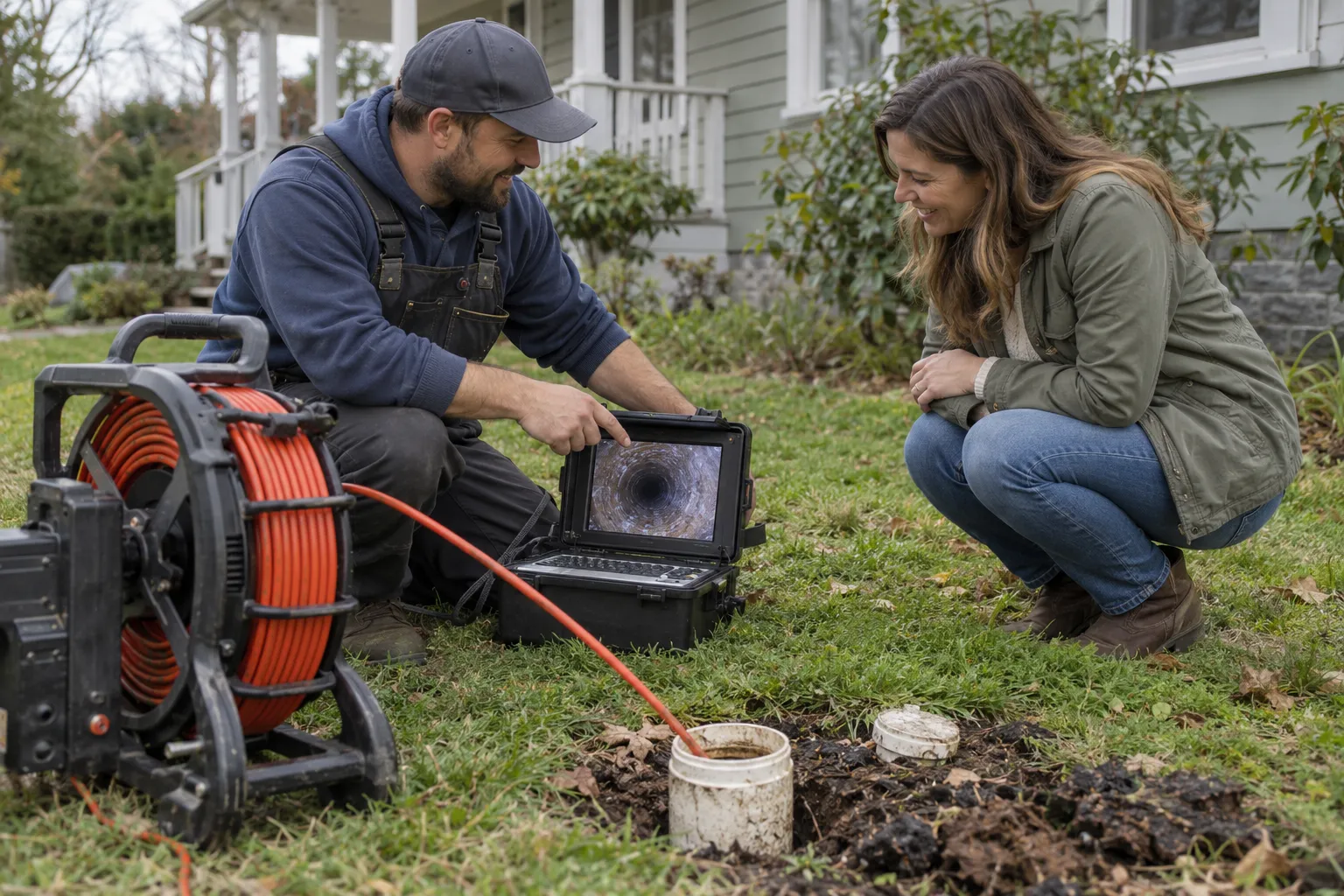
The usual first step is a camera inspection. A small camera on a flexible cable runs through the line and shows roots, cracks, sags and breaks on a screen. The provider can then use a locator to mark the depth and position of the problem from above ground.
This matters because it replaces guesswork. You see the damage, and the repair plan matches what is actually there.
Sewer Line Repair Options
The right method depends on pipe material, depth, damage length and what sits above the line.
Spot Repair
A provider digs to one damaged section and replaces it. This suits a single break or bad joint when the rest of the pipe is sound.
Pipe Lining
A resin-coated liner is pulled into the old pipe and cured into a new inner wall. It limits digging, but it needs a pipe that is still open and not badly collapsed.
Pipe Bursting or Full Replacement
Bursting pulls new pipe through the old path while breaking the old pipe outward. Full replacement means an open trench. Both fit pipe that is beyond patching.
Permits and Property Lines
Many areas require a permit for sewer work, and some require an inspection afterward. The line may also cross public property between your house and the main. Ask the provider who handles permits and where your responsibility ends.
Questions to Ask the Plumber
- Can I see the camera footage?
- Which repair method do you recommend, and why?
- Is the quote written, with materials and cleanup listed?
- Who pulls the permit?
- What warranty comes with the work?
Next Step
If sewage is already rising, stop water use and reach out to a provider first. If you only suspect a problem, request an estimate and schedule an inspection before frost or storm season adds stress to the line.
What's Included
Camera Inspection
A small camera shows roots, cracks, sags and breaks inside the line before any digging starts.
Emergency Drain Clearing
Providers can often clear a blockage first to stop the backup, then inspect the pipe.
Repair or Replacement
Spot repair, pipe lining, bursting or full replacement, chosen to fit your pipe and yard.
Written Quote
Ask for a written scope with materials, permits and cleanup before any work begins.
Typical Sewer Repair Cost Ranges
These are typical U.S. ranges and they vary by pipe depth, length, material, access and local permit rules. Treat them as a starting point, and always get a written quote before work begins.
| Item | Typical range | Notes |
|---|---|---|
| Camera inspection | $100 – $500 | Often worth it before choosing a repair |
| Main line clearing (jetting or cabling) | $150 – $800 | Clears the blockage but does not fix damage |
| Spot repair of one section | $1,000 – $5,000 | Depends on depth and surface above |
| Pipe lining | $3,000 – $12,000 | Needs pipe that is not fully collapsed |
| Pipe bursting | $4,000 – $15,000 | Less digging than a full trench |
| Full open-trench replacement | $3,000 – $25,000 | Driveways and landscaping raise the total |
How It Works
Stop Water Use
Stop flushing and running water so the backup does not spread, and keep everyone out of the wet area.
Call for Availability
Request a callback to check which provider can respond and describe your symptoms.
Inspect, Then Quote
A provider clears the blockage if needed, scopes the line and gives a written quote.
Repair and Document
Approve the plan, keep photos and invoices, and ask the provider about permits.
Why Call Purchasednewspaper Plumbing
Local Provider Network
Connects you with independent providers who work near you and know local conditions.
Clear Steps
Plain timelines and checklists help you act in the right order when a line fails.
Older Home Focus
Extra guidance on aging pipe, past repairs and hidden surprises in older houses.
Honest Role
We make the connection. Independent providers do the inspection, repair and quoting themselves.
Other Services
Need sewer line repair in Minneapolis?
Describe the problem and a local provider in our network can follow up. Request a callback to check availability, or send a request by email at contact@purchasednewspaper.garden.
No obligationSewer Line Repair FAQ
How do I know if my sewer line is broken or just clogged?
A clog in one fixture usually affects only that drain. If several drains slow down together, or the drain closest to the basement floor backs up, the main sewer line is likely involved. A camera inspection confirms whether it is a blockage or damage.
Will homeowners insurance pay for sewer line repair?
It depends on your policy and the cause. Some policies may cover sudden damage, while wear, age and root growth are often excluded. Check your policy, and ask the provider to help document the damage for a claim.
Can a sewer line be fixed without digging up my yard?
Sometimes. Pipe lining and pipe bursting need little digging, but they only suit certain pipe conditions. A camera inspection shows whether a trenchless method will work or whether a spot repair or full replacement is needed.
Tell us what happened
Describe the problem and a local provider in our network can follow up. Request a callback to check availability, or send a request by email at contact@purchasednewspaper.garden.
No obligation